
What does "Kokkoku Muji" mean? Why was the first collection called "Kokkoku Muji"? The thoughts behind the name.
The Meaning Behind the Name.

In rebooting COCON,
we first returned to our "origin."
Substance, not embellishment.
Permanence, not trends.
So, what is the essence of a tie?
It is...
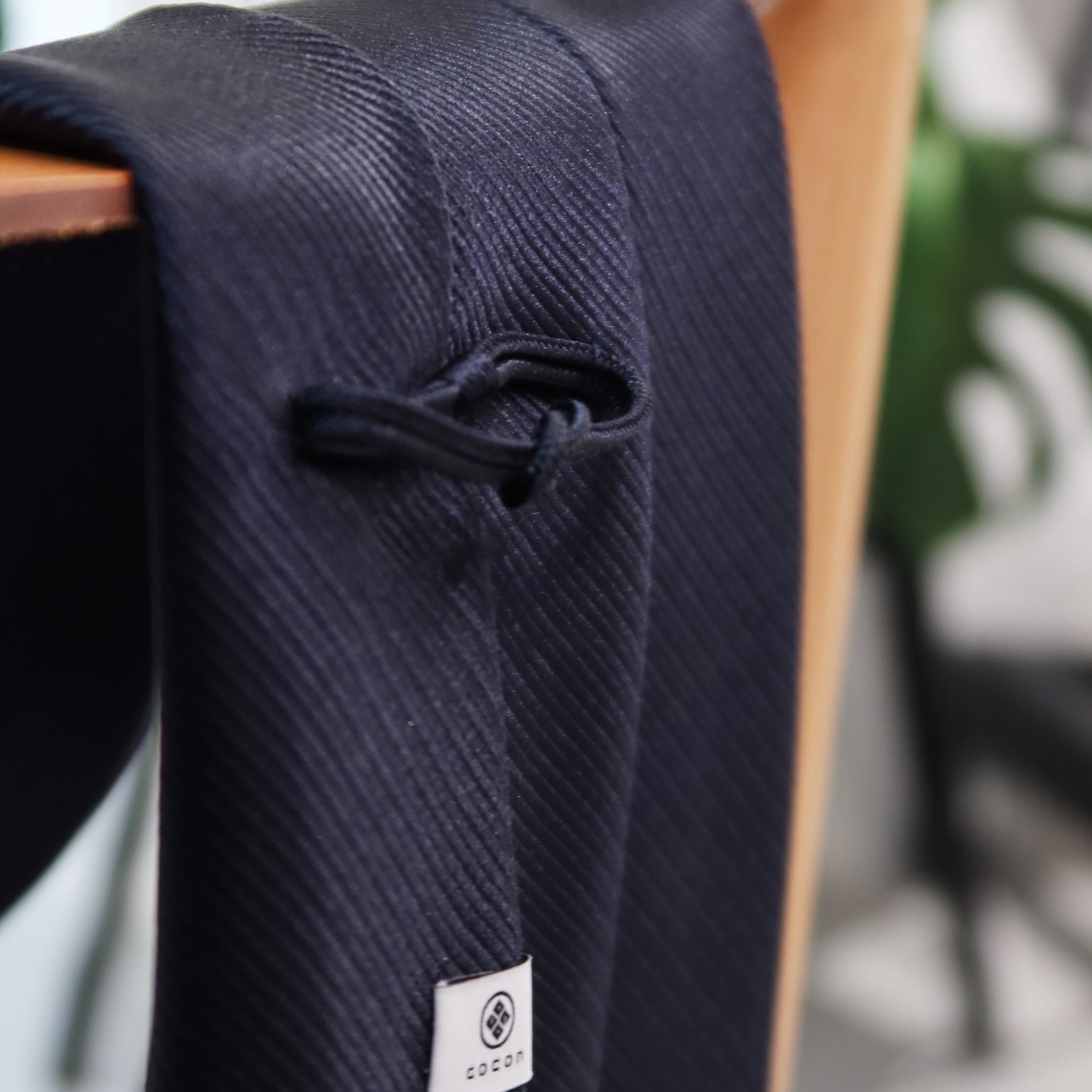
the beauty of the weave itself.
Exploring the World's Archives

We have traveled to silk textile mills around the world,
and seen tens of thousands of fabric archives.
What struck us was
the traditional stripe collection,
where each stripe, like Japanese family crests or Scottish tartans, was given a name.
The width of the stripes.
The color combinations.
All of it precisely recorded and passed down.
There, we found a "culture" that transcended mere patterns.
And we realized something.
That many traditional stripes
were archived in rep weave.
Why rep?

Most patterns on ties are formed by the weft threads.
How directly can the color of the weft thread be expressed?
The choices are satin or rep.
In other weaves, the warp threads show through,
dulling the color.
And one more condition
for archiving...
that is durability.
Not fraying after many years,
and maintaining the outline of the stripes.
The answer was rep weave.
A weave that accurately preserves color and withstands time.
That is what rep is.
The Origin, with Today's Best Technology.

COCON decided.
To weave rep, the "absolute fundamental" of tie fabrics,
with Japan's highest level of technology,
and preserve it as an archive.
That this was the first step in the reboot.
However...
the ideal did not easily take shape.
Between Ideal and Reality

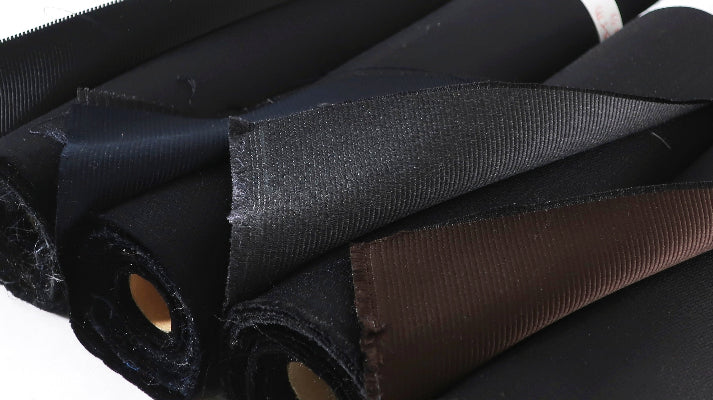
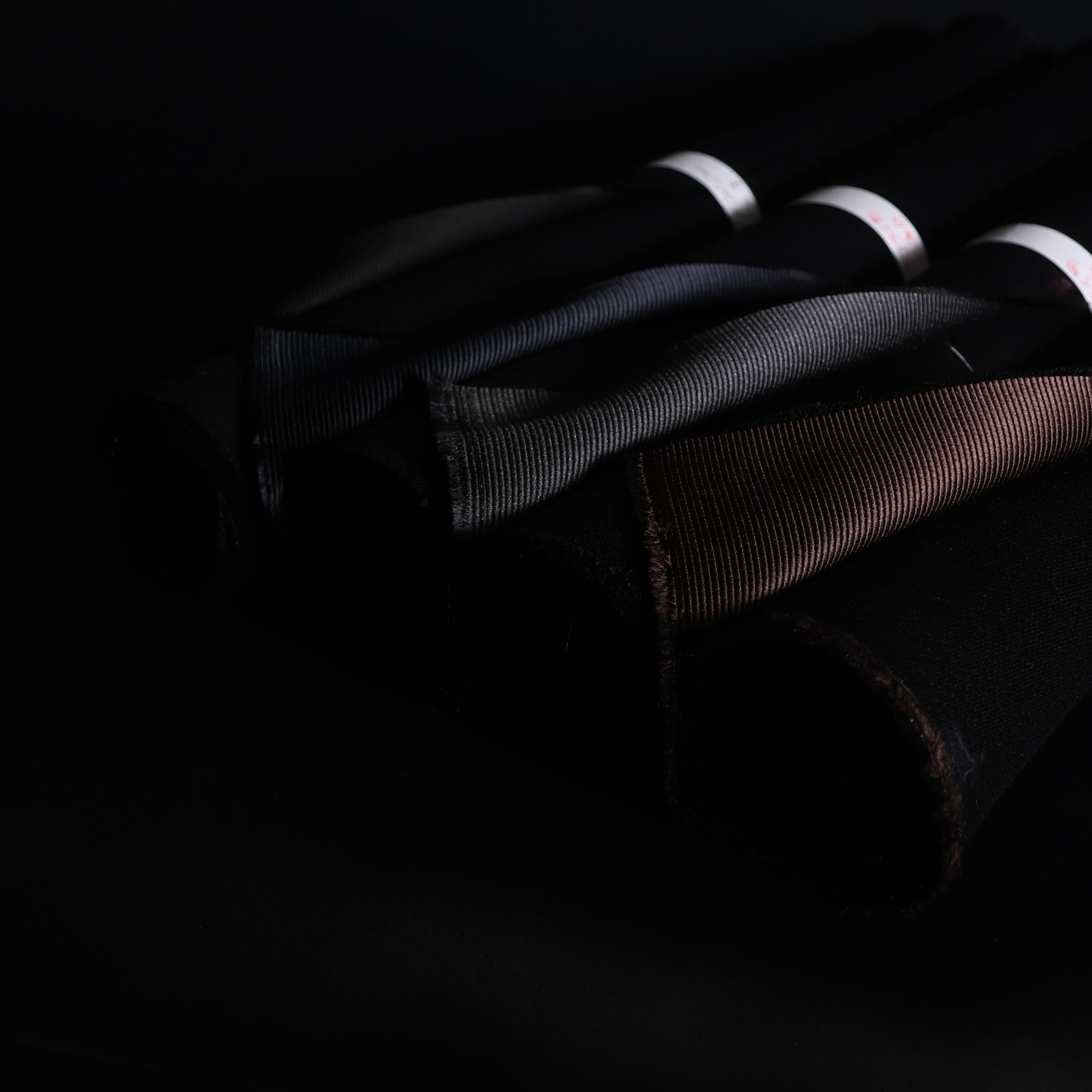
For "Kokkoku" rep,
we set the ribs slightly thicker,
and maximized the weft density.
To bring out the maximum luster of silk,
and express colors with the highest possible purity.
The resulting fabric was overwhelming.
But at the same time,
it was too dense,
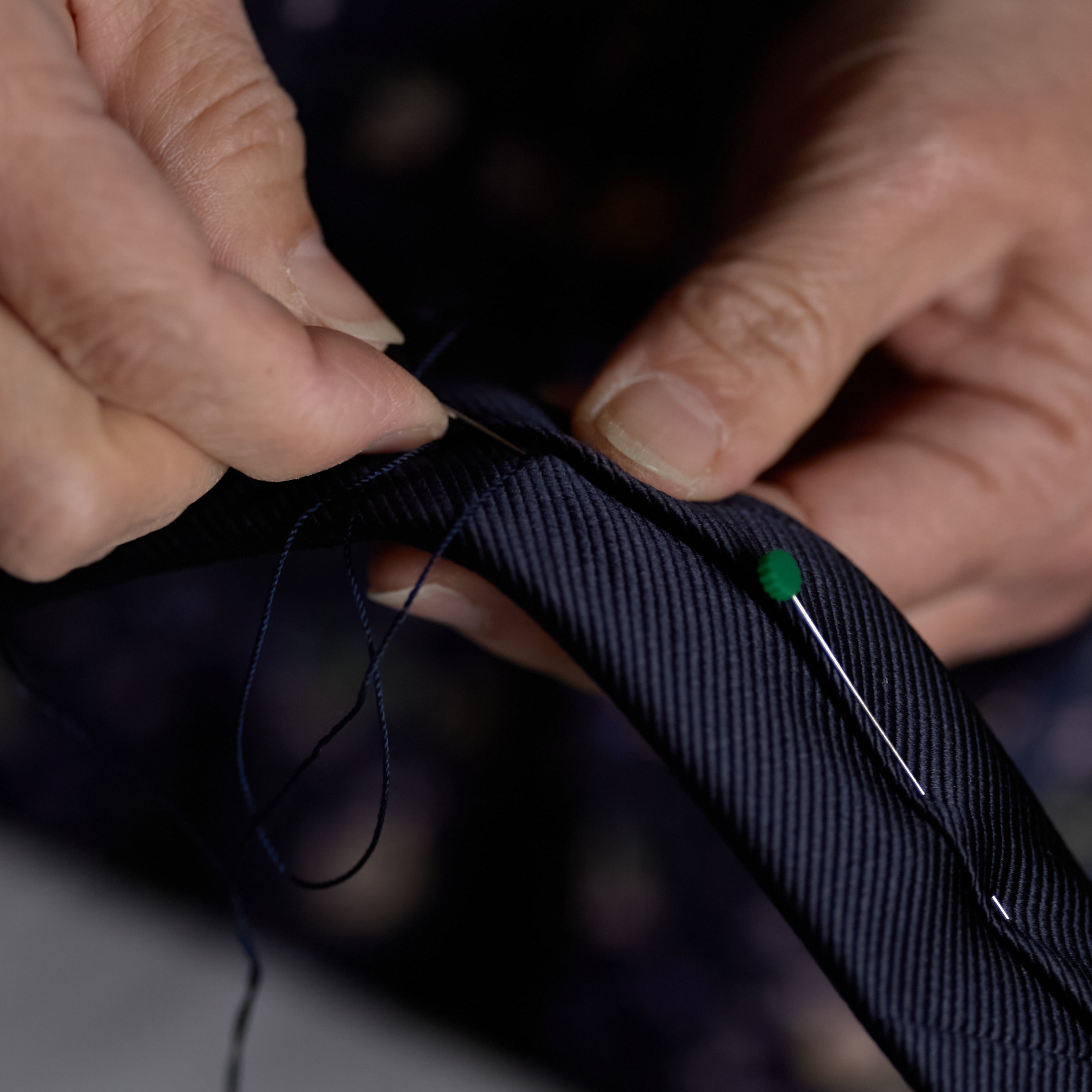
the needle wouldn't pass through.
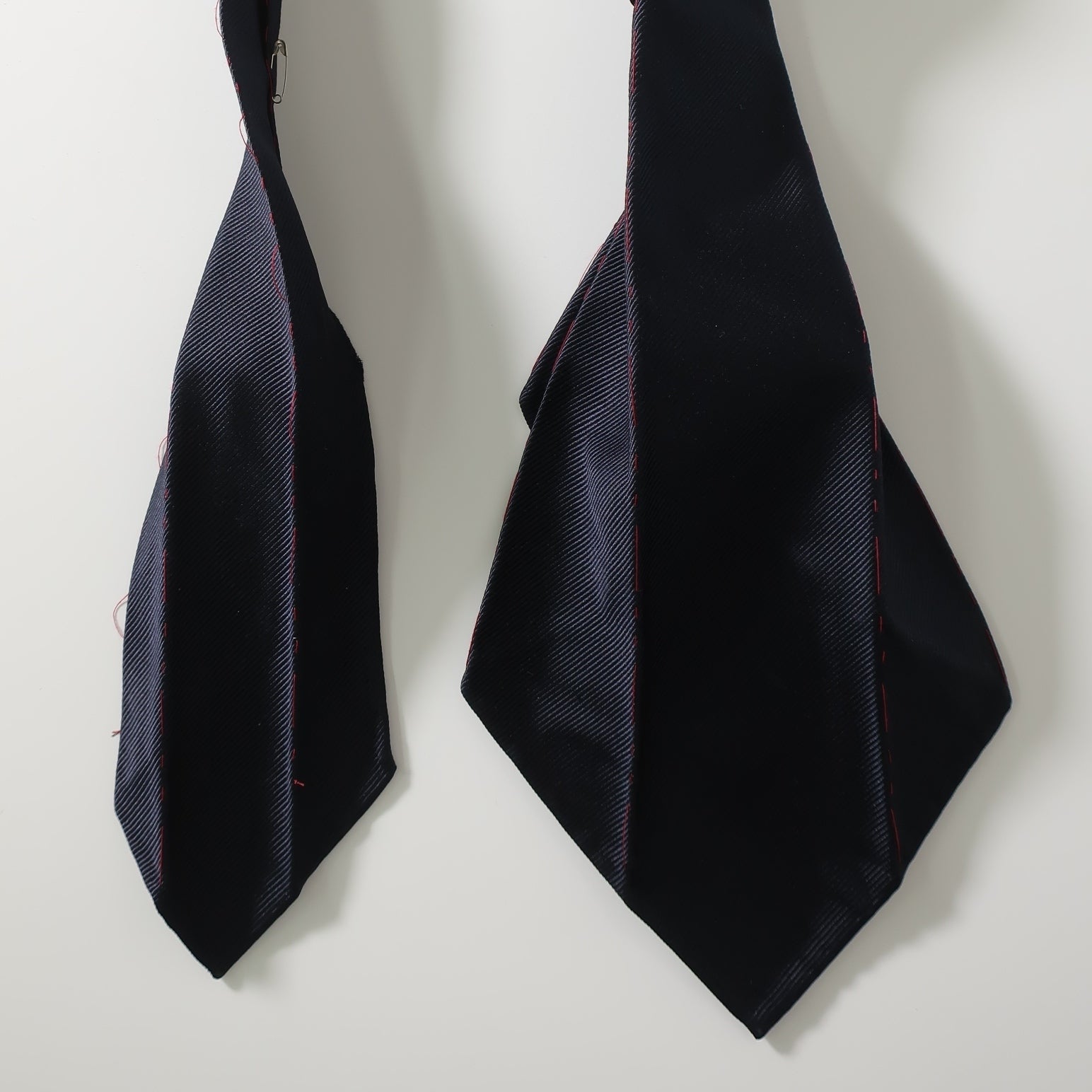
Although one craftsman managed to sew a single tie,
the conclusion was that mass production was impossible.
Furthermore, the fabric was stiff,
and prone to marks when made into a product.
The ideal rejected the product.
Even so,
giving up was not an option.
Adding Another Layer of Technology

After repeated discussions with the weaving mill,
we decided to apply a special finishing process not typically used for ties.
To give the fabric suppleness,
and improve needle penetration.
Furthermore, for sette pieghe ties,
we devised a buffer structure with spun silk entirely on the back.
To protect beauty,
we put effort into unseen parts.
And so, at last,
COCON's ideal rep was completed.
The Name "Kokkoku"

The ribs of the rep are
like the raked patterns in a Japanese dry garden.
An ordered, quiet, yet undeniably present beauty.
Time flows constantly,
people change,
and eras shift.
Yet, there are things that remain engraved.
Technology.
Aesthetics.
Philosophy.
All of it,
engraved into each and every rib.
Therefore,
this solid color is "Kokkoku Plain."
A plain color, yet
the most eloquent fabric.
It is COCON's origin,
and the first step towards its future.