

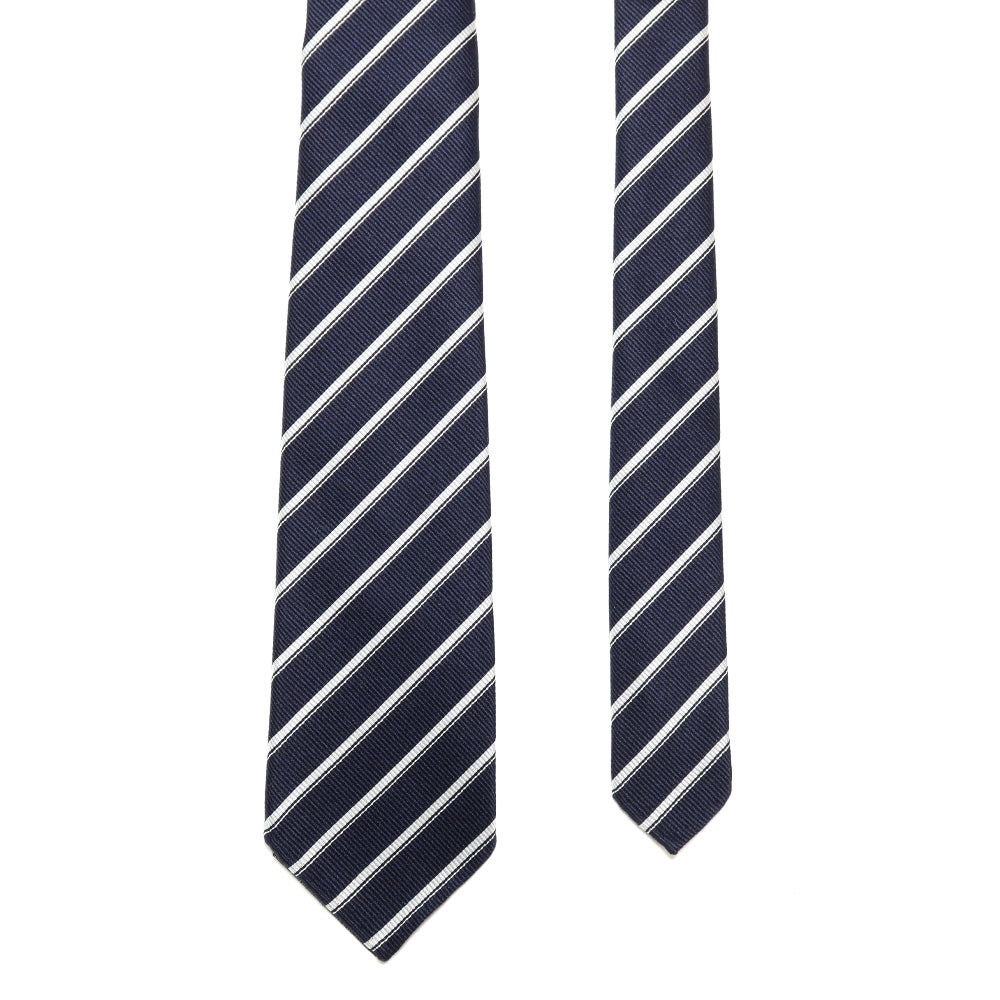
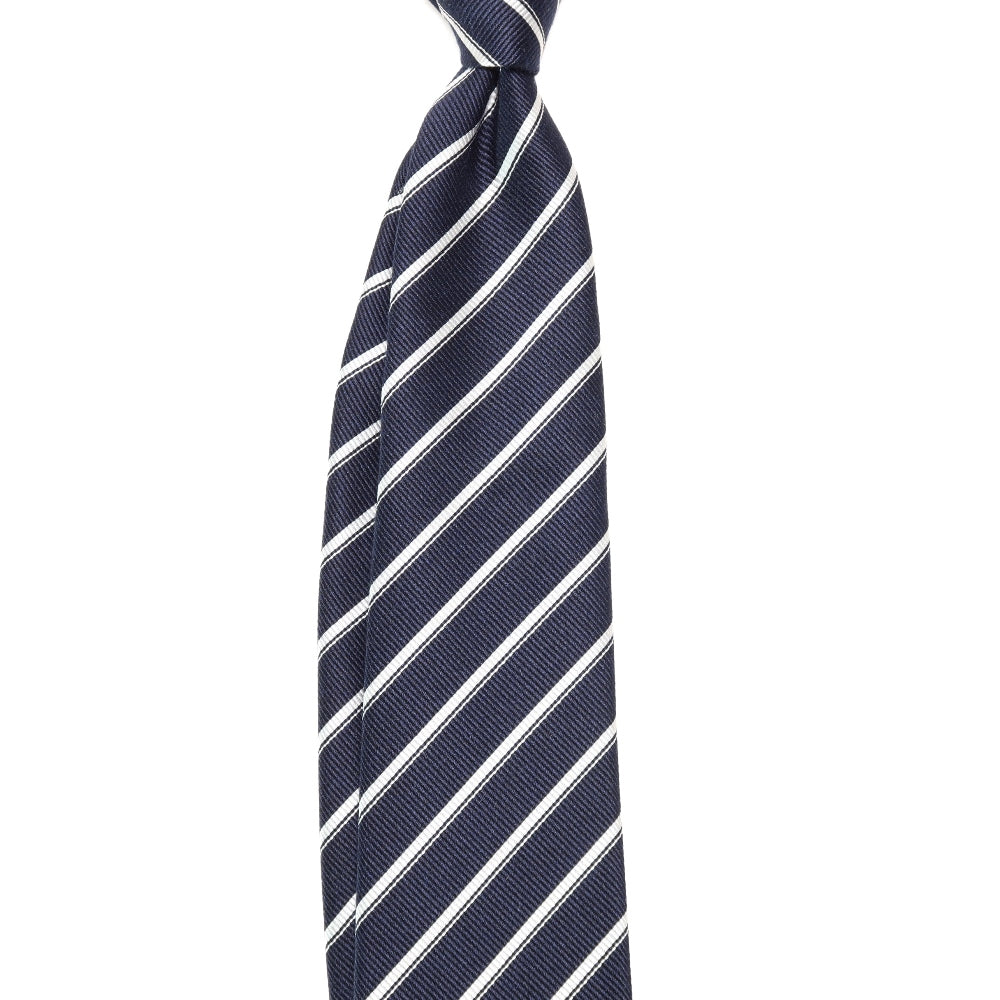
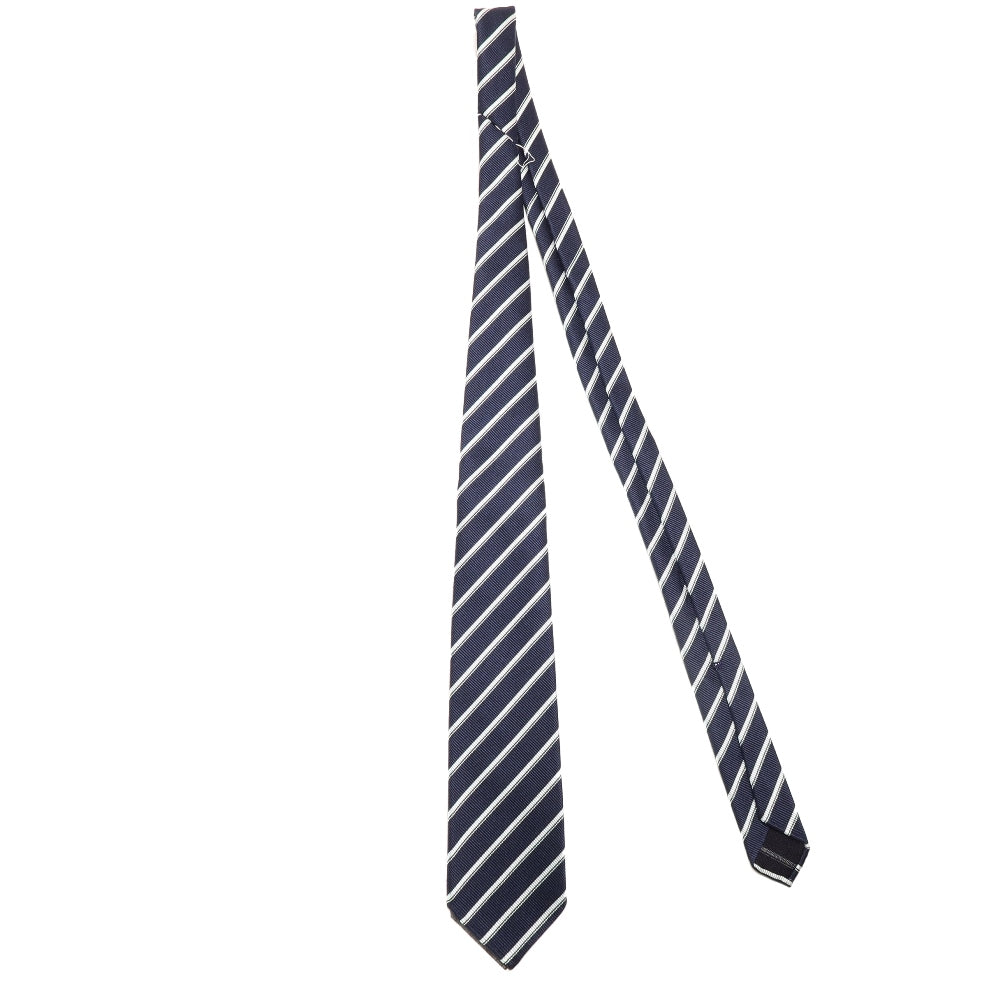
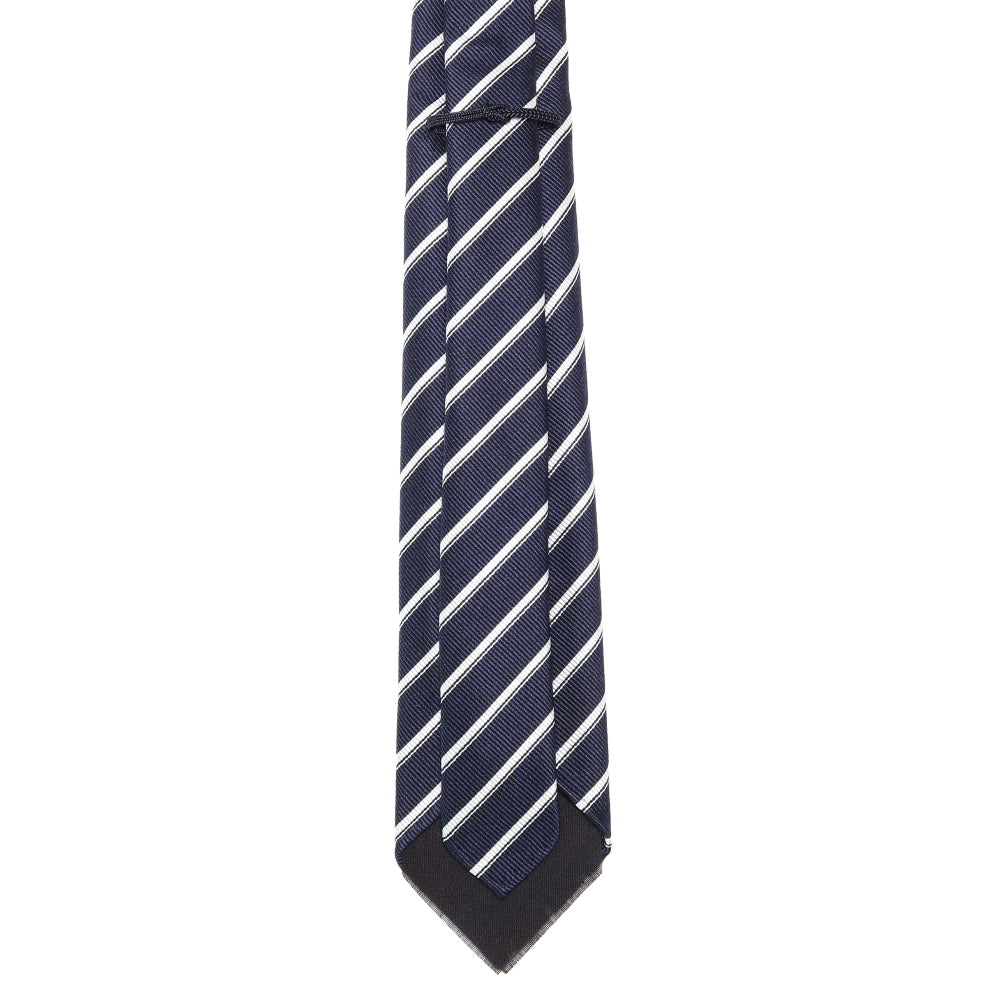
KOKKOKU STRIPE 01 Handmade Sette Pieghe Stripe Tie Heather Navy x White
Tax included. Shipping calculated at checkout

Text text text text text text text
Text text text text text text text
- Due to the nature of the product, there may be individual differences due to the production process.
- We try to make the product images as close to the actual product as possible, but please note that there may be differences depending on your display.
- Contact us by email
- Contact by phone
042-306-6412 (10:00-15:00)
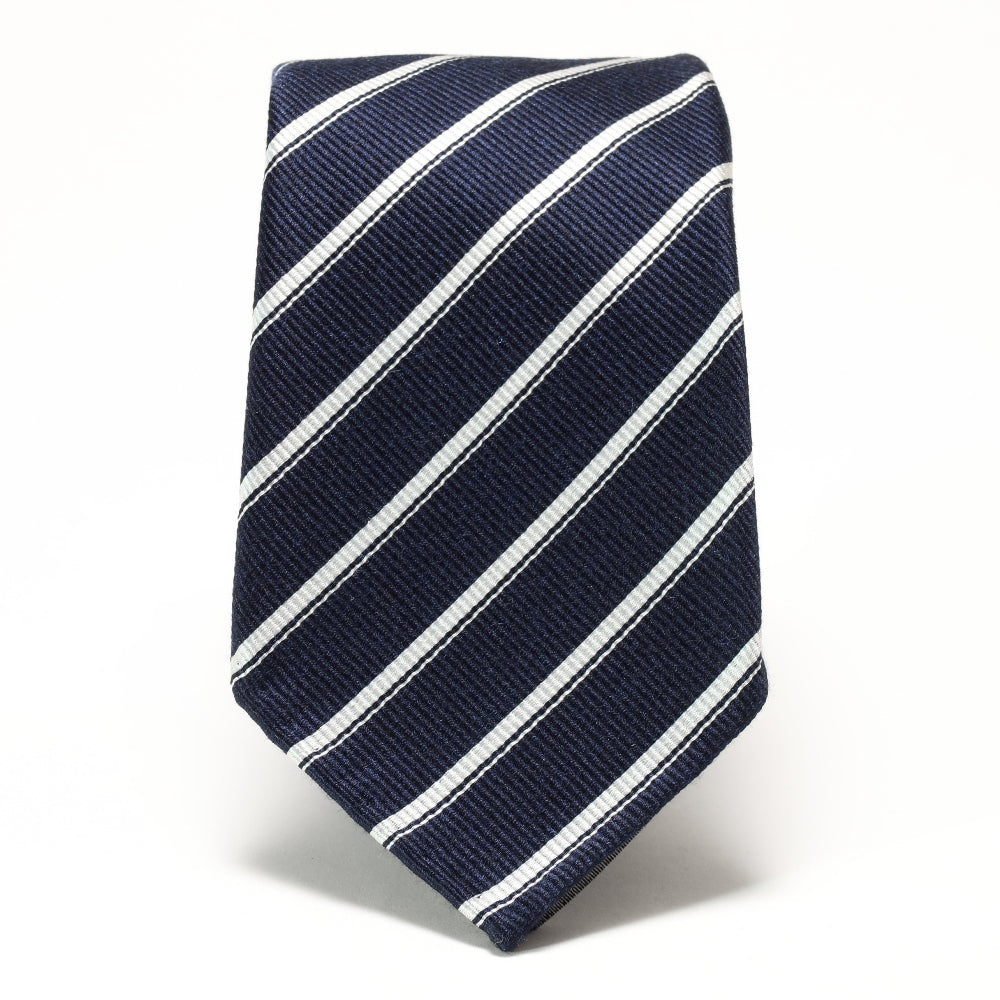
Handmade Sette Piege Tie Kokkoku | Stripe 01 Heather Navy
Enjoy the quiet rhythm woven by the fabric with the finest tailoring
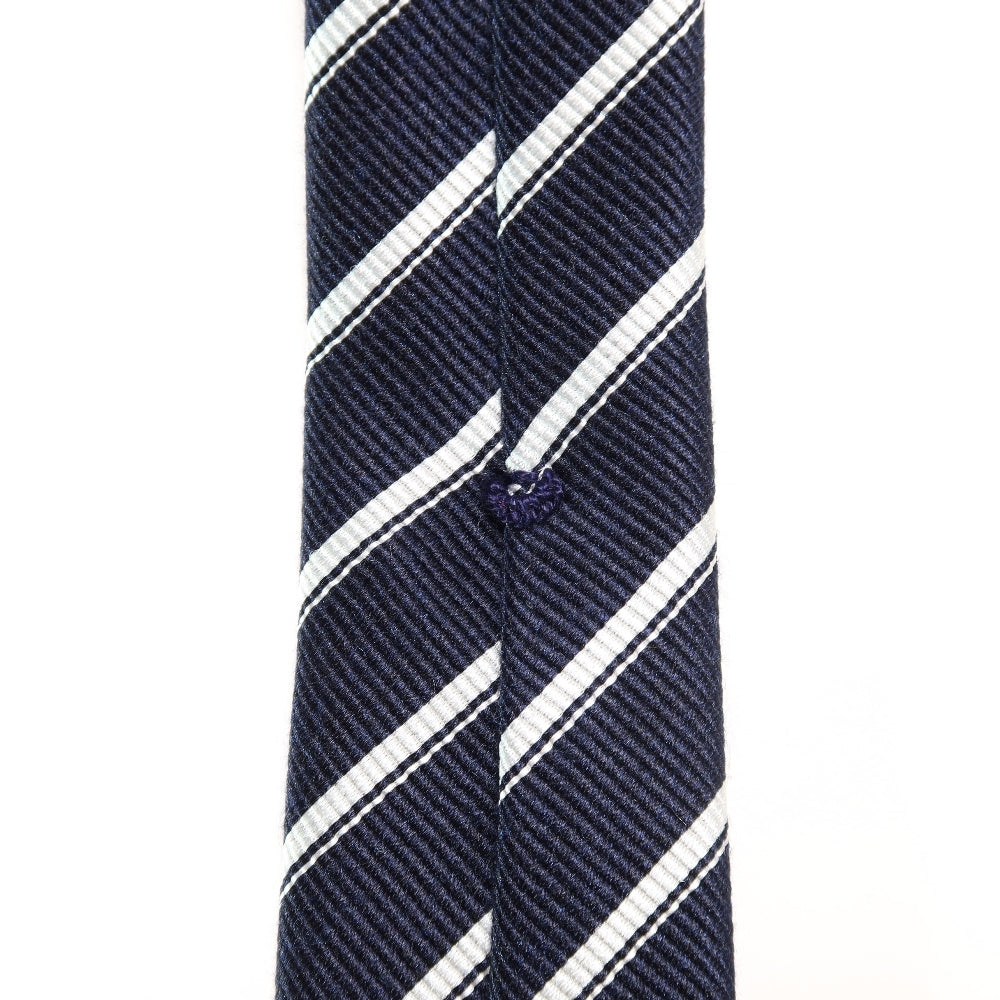
This Sette Piege model features the striped rep fabric "Kokkoku - Stripe 01".
Similar to the solid Kokkoku fabric, the ridges created by the ultra-high-density woven fabric possess a subtle yet undeniable presence, despite their seemingly simple appearance.
By combining two stripes of different widths, a sharp look not found in solid colors is achieved.
With its understated pattern, it is highly versatile and blends naturally with various suits and jackets.
This model is highly recommended for those who have found traditional ties lacking, or who seek the unique texture and special feel of handmade craftsmanship.
Furthermore, for those well-versed in sette piege, it will be a memorable and special tie, with little chance of duplication.
Fabric and Material

Kokkoku | Stripe
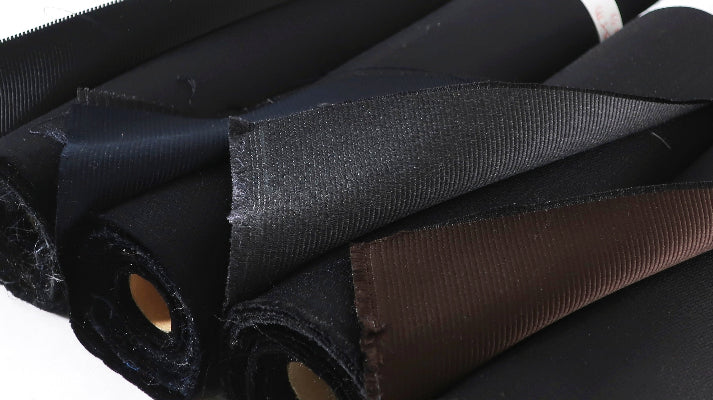
Cocon's timeless classic, the striped rep fabric "Kokkoku".
Since its establishment, Kokkoku has undergone numerous improvements to become the ribbed (rep) fabric we most confidently recommend.
This fabric is woven with ultra-high density using special equipment. For this sette piege model, a unique buffer structure made of spun silk is used across the entire back to reduce pressure marks on the fabric.
Its ridges possess a serene beauty reminiscent of the sand ripples in a Japanese dry landscape garden.
The pursuit of creating the most beautiful ridges possible, meticulously imbuing the finest techniques, and passing them down to future generations—such is the sentiment embedded in Kokkoku.
For Kokkoku Stripe, some of the fabric used is different from Kokkoku solid.
In addition to gray, navy and brown also feature heathered colors with a melange feel.
You can enjoy the deep, beautiful contrast created by the interplay of colors and stripes.
As silk top yarn and spun silk are used, a slight fuzziness may appear on the fabric surface.
Also, please note that there may be individual differences in texture due to production lots of the yarn.
There are no quality issues, and we hope you enjoy the unique character of the fabric.
Products made with the same fabric

Extremely Dense Woven Fabric and Special Finishing Process
Kokkoku is woven by beating the weft threads of the finest silk yarn with an incredibly high density, far beyond what is normally possible for silk fabrics.
Fabric woven to such an extreme density makes it very difficult for needles to pass through during sewing, making hand-tailoring extremely challenging.
Furthermore, the fabric can be stiff, affecting the feel of the tie when worn, and it may be prone to pressure marks once it becomes a product.
To resolve these issues, a finishing process is applied after the fabric is woven. Especially for sette piege, where a natural drape is crucial, a special finishing process not commonly used for ties is employed to address these various problems.
Moreover, after the finishing process, all fabrics undergo strict inspection using a linen tester (tabletop loupe), etc., before being made into products.

Yarn and Dyeing Bearing the Name of a Goddess
The raw pure silk yarn used is carefully selected, top-grade 6A natural silk.
This top-grade 6A raw yarn is of a different caliber from other raw yarns. The raw yarn itself bears the name of the Roman goddess of flowers, spring, and fertility, and is called "Flora," with a certificate attached. As its name "Flora" suggests, the cocoons harvested in spring, when quality is highest among the four seasons, are exceptionally high-grade and rare silk, boasting outstanding quality even within the 6A rank.
The pure silk threads made from this are then dyed by artisans at a long-established dyeing house in Kyoto, which has been responsible for Japanese dyeing since ancient times, without any compromise. Through careful and time-consuming dyeing by artisans with abundant knowledge and years of experience, truly unique pure silk threads are created.

Color
The fabric of this product is woven using rare silk top yarn, which undergoes twice as many processes as regular silk yarn, and two types of pure silk yarn with different thicknesses. Multiple colors of silk are first crushed and then re-spun into yarn, creating a unique luster and melange feel in the silk top yarn. By further adding two shades of navy and weaving them together, a deep, unparalleled navy is achieved. Furthermore, in the white stripe areas, a bold line is woven with wild silk (tussar silk) and a fine line with cultivated silk, deliberately using different types of yarn.
Products in similar colors

Available Colors
Color variations of this model
Navy|Brown|Gray|Black
Tailoring
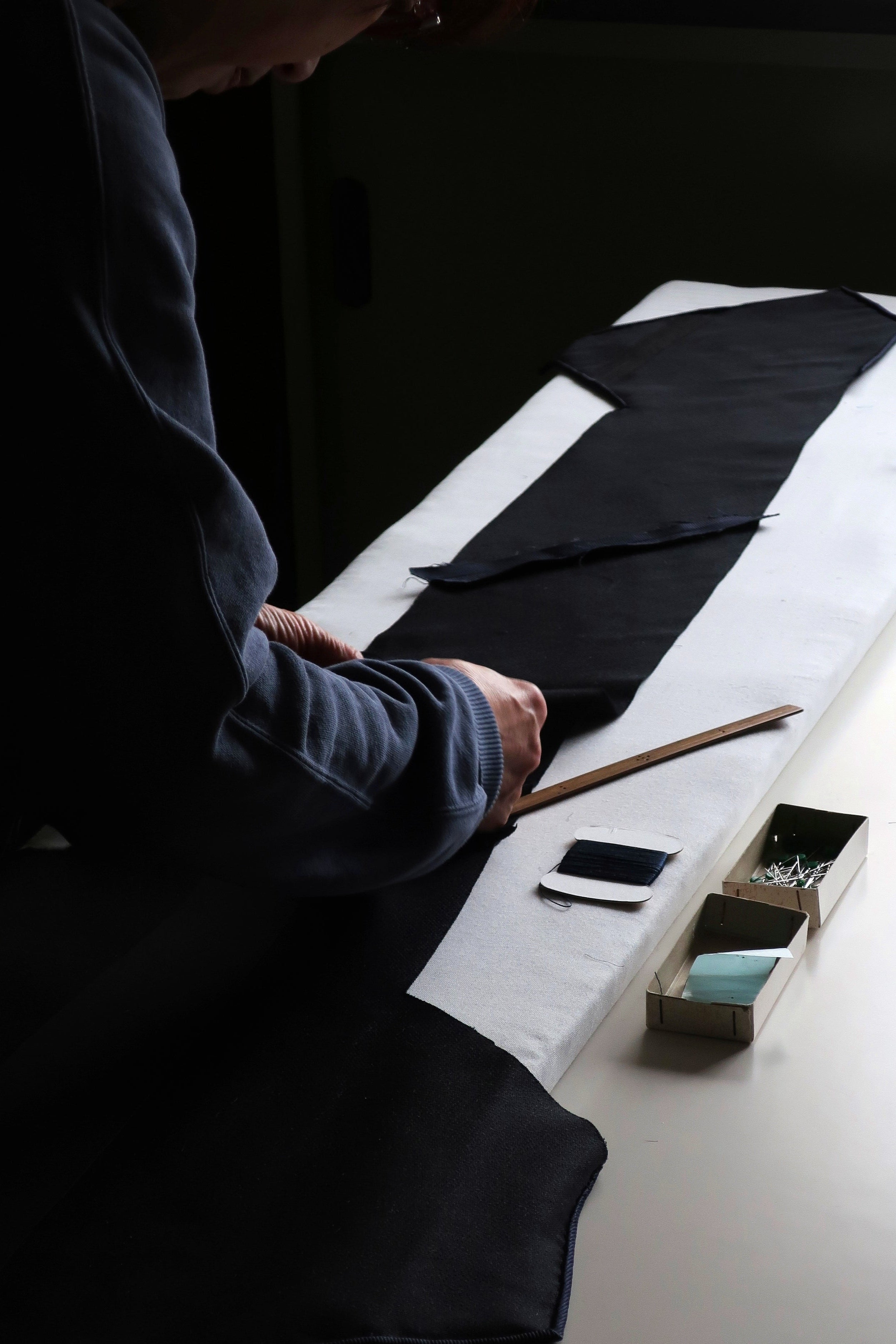
Handmade by Skilled Artisans
Each piece is meticulously hand-tailored by skilled artisans. Production is limited to one tie per day, so stock may be irregular. We deliver an exquisite tie that embodies our unwavering commitment to materials, patterns, sewing, and auxiliary materials.
Currently, skilled artisans capable of creating genuine sette pieghe in Japan are extremely rare, making Japanese handmade sette pieghe items exceptionally precious. Each sette pieghe tie, carefully hand-tailored by skilled artisans, possesses a unique plumpness characteristic of handmade items and an distinct presence that machine-made ties cannot replicate. Furthermore, the feel when worn differs from conventional ties, allowing you to enjoy a three-dimensional knot and elegant dimple.
~What is Sette Piege?~
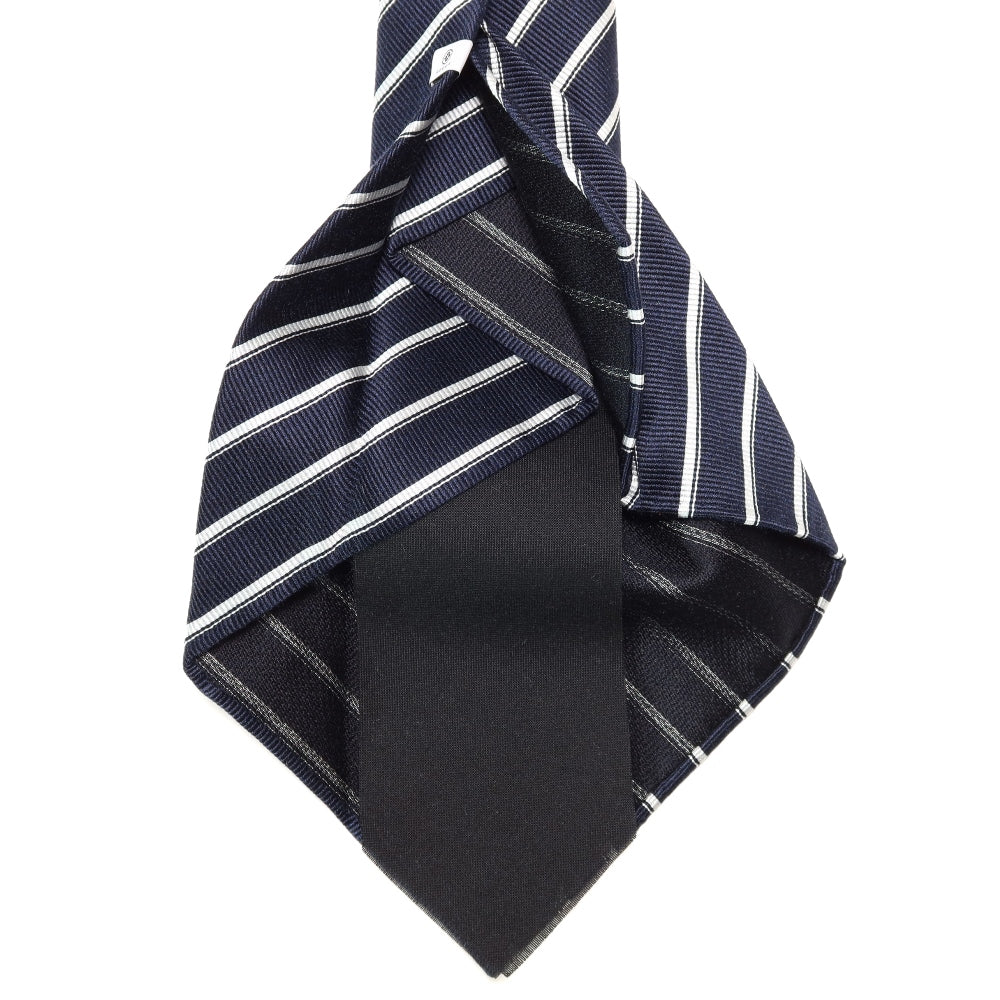
A traditional tie originating from Italy, "Sette Pieghe" means "seven (sette) folds (pieghe)" in Italian, and is known as a "Seven Fold Tie" in English.
As its name suggests, it is tailored with seven folds, using approximately twice the amount of fabric as a normal tie, and each one is carefully crafted by skilled artisans.
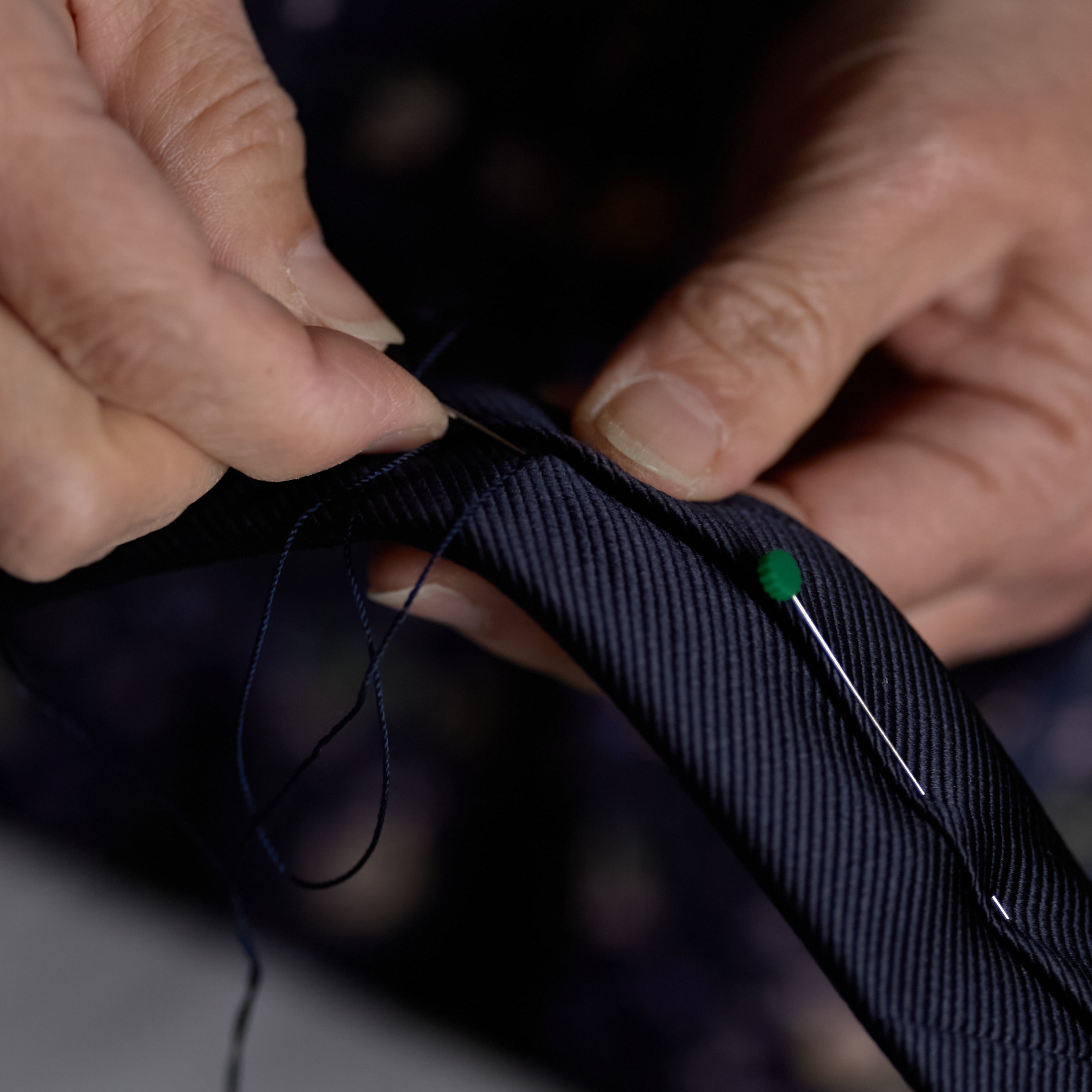
Simply hearing "seven folds" might sound easy, but the manufacturing method is extremely difficult, requiring an understanding of the characteristics of each fabric and thread by touch, and then folding and tailoring them in a balanced manner. Furthermore, to create a soft and three-dimensional appearance, each stitch is sewn by hand. Due to the high level of craftsmanship and the immense time and effort required, sette pieghe ties are considered special.

Reverse Fold Sette Piege
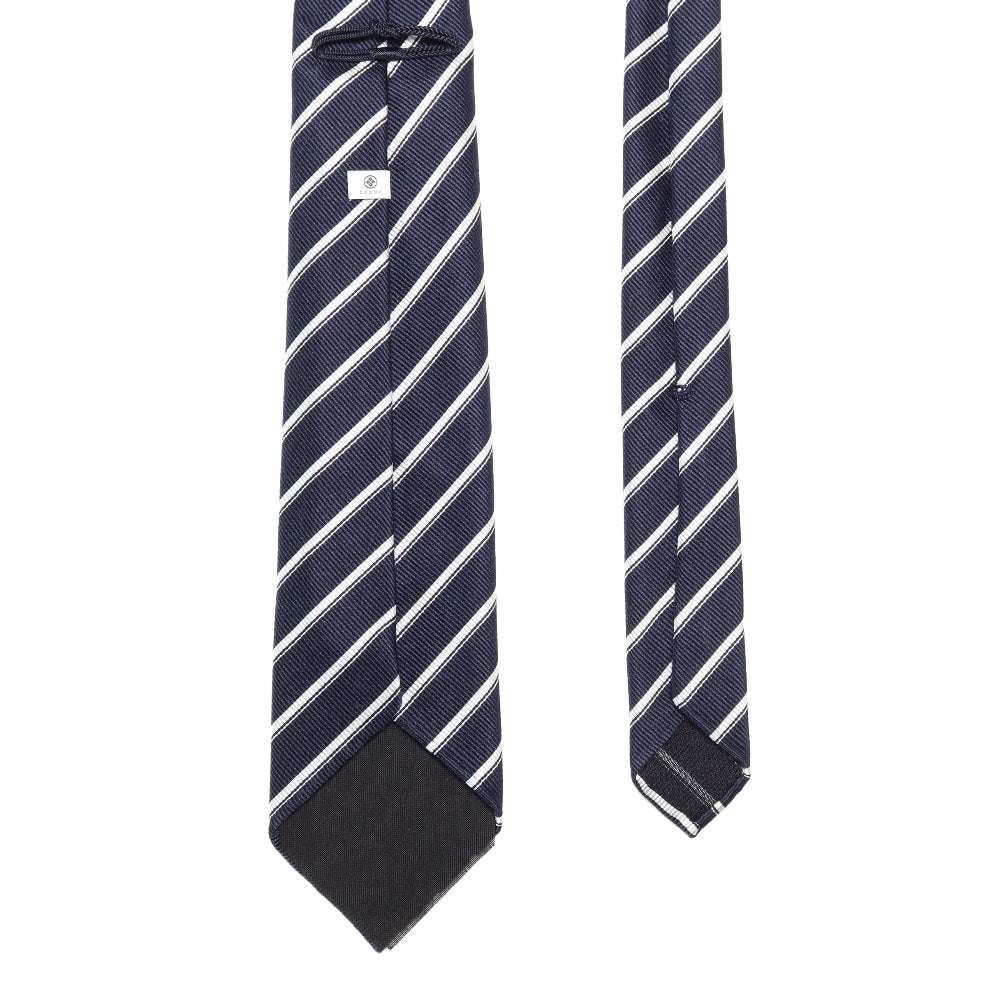
While typical sette piege ties are tailored with the fabric folded to the front side, Cocon adopts a unique tailoring method where the fabric is folded in the opposite direction (towards the back side with the brand tag). This is an original Cocon specification devised to minimize pressure marks on the fabric after tailoring.

Hidden Bar Tack & Horseshoe Bar Tack
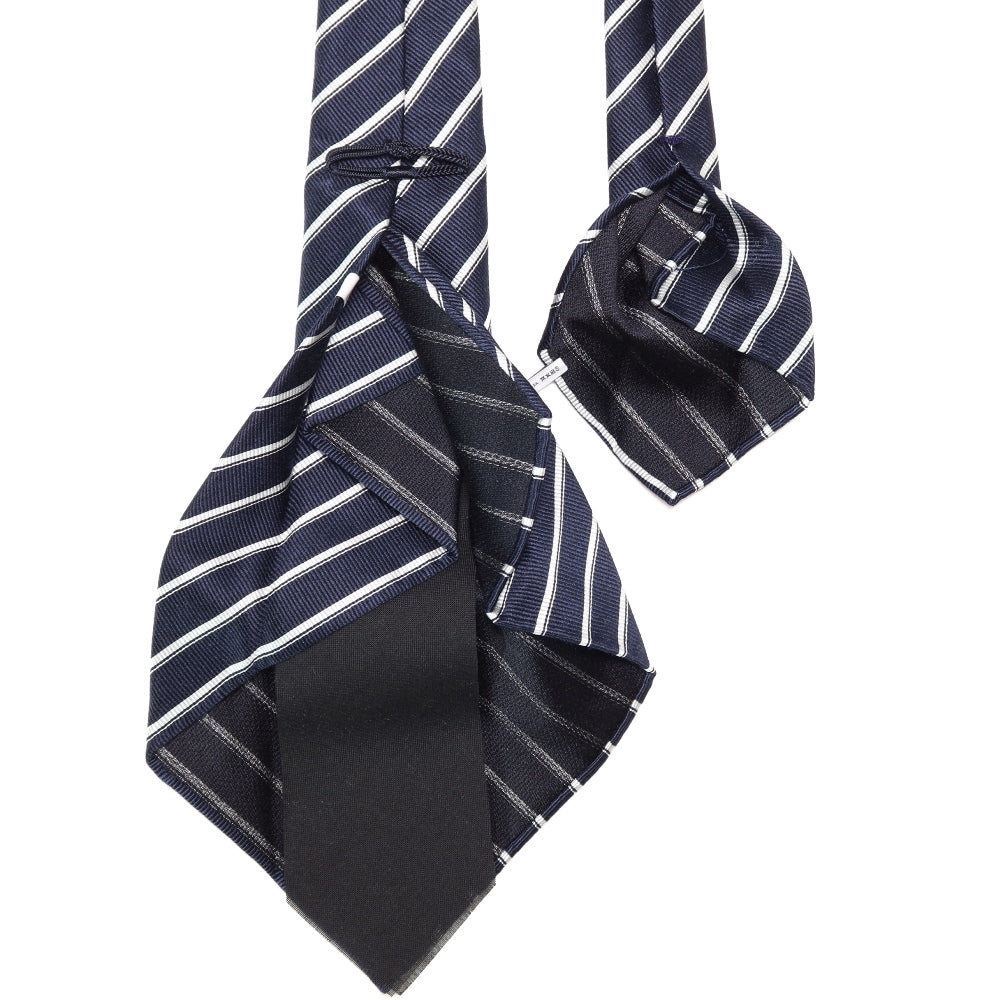
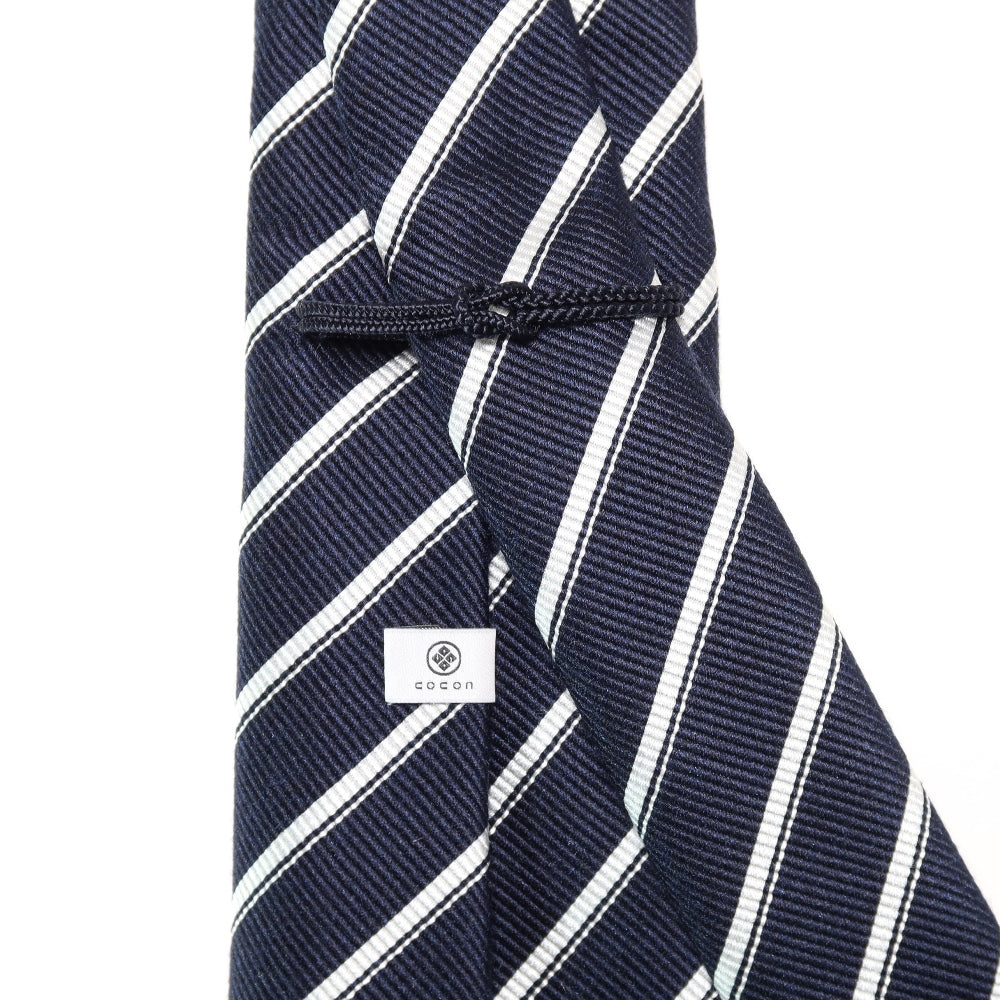
Two unique bar tacks are used on the back. The image shows the horseshoe shape on the small blade.
On the back of the large blade, a hidden vertically woven bar tack made of 100% highly twisted silk yarn is used, invisible from the outside. On the back of the small blade, a horseshoe-shaped woven bar tack made of French cotton embroidery thread is used. These bar tacks serve a functional role in securely fastening the left and right fabrics, and also act as a decorative design imbued with the artisan's skill and aesthetic sense.
Both are original details conceived by Cocon, symbolizing artisanal skill with their three-dimensional quality and presence, achievable only through meticulous handmade tailoring.
Furthermore, in this sette piege model, these bar tacks are positioned as high as possible to facilitate natural distortion and drape.
Beyond that, you can fully appreciate the high-level tailoring (seven folds) hidden inside.

Industry's First Removable Interlining
For sette pieghe, Cocon has adopted the industry's first removable interlining, conceived uniquely by us. This interlining is included until the product reaches the customer to prevent pressure marks (fabric impressions) that are characteristic of sette pieghe's fabric folds. Customers are meant to remove it themselves before use.
Please enjoy this careful ritualistic moment.
~Please follow these steps to remove the removable interlining before use~
1. Locate the white basting thread in the middle of the tie (at the diagonal seam).
2. Slowly pull this thread to release the black removable interlining inside the tie.
3. Gently and carefully pull out the black interlining visible on the back of the large blade.
Click here for more details
Auxiliary Materials

Ultra-High Density Echizen Woven Label
The brand tags and quality tags used on our products are Echizen woven labels, crafted by a Fukui Prefecture woven label manufacturer with outstanding technology.
For the sette pieghe model, since the bar tack position is higher compared to the tre pieghe, the tag position is adjusted to achieve the most beautiful balance for this unique design.
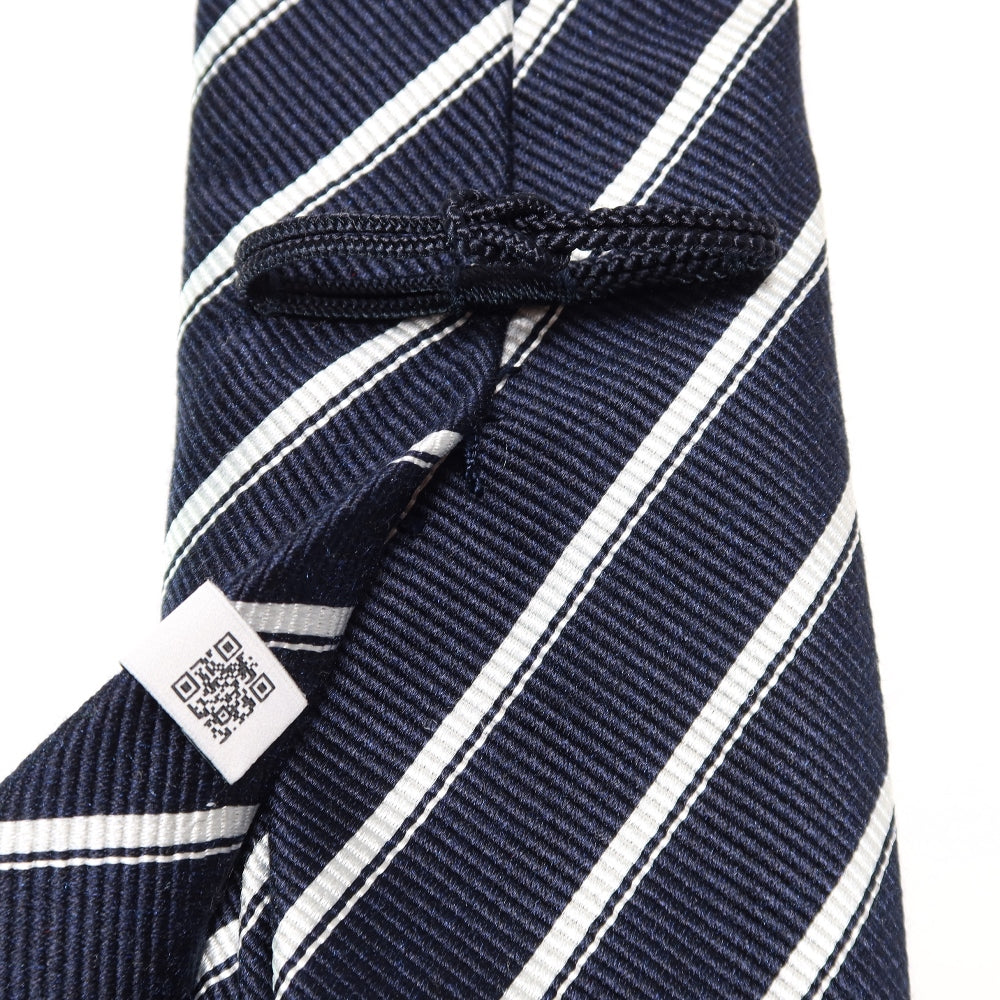
Furthermore, to convey the high level of Japanese weaving technology, we challenge ourselves to express brand logos, QR codes, and washing instructions at the world's smallest level. We use ultra-fine threads and have repeatedly refined them so that even though they are small, each character can be clearly recognized. While this may be a detail you don't usually pay much attention to, it hides Japan's proud advanced technology.

Asymmetrical Braided Loop (Kakuyatsugumi × Tsuri-yotsugumi)
The loop attached to the back of the tie, also known as the keeper loop, is typically made from the same fabric as the main body.
However, Cocon uses a loop made with traditional Japanese kumihimo (braiding) techniques. This braided loop is custom-made for Cocon by a long-established kumihimo workshop in Kyoto, making it a completely original specification.
This sette pieghe tie features an asymmetrical loop made from two types of kumihimo: kakuyatsugumi and tsuri-yotsugumi.
While using two types of kumihimo requires more effort and cost, we intentionally design the symmetrical structure to be asymmetrical, expressing dynamism and freedom.
Furthermore, "asymmetry = incompleteness" symbolizes our desire for continuous growth, making this a special specification.
Gift Box
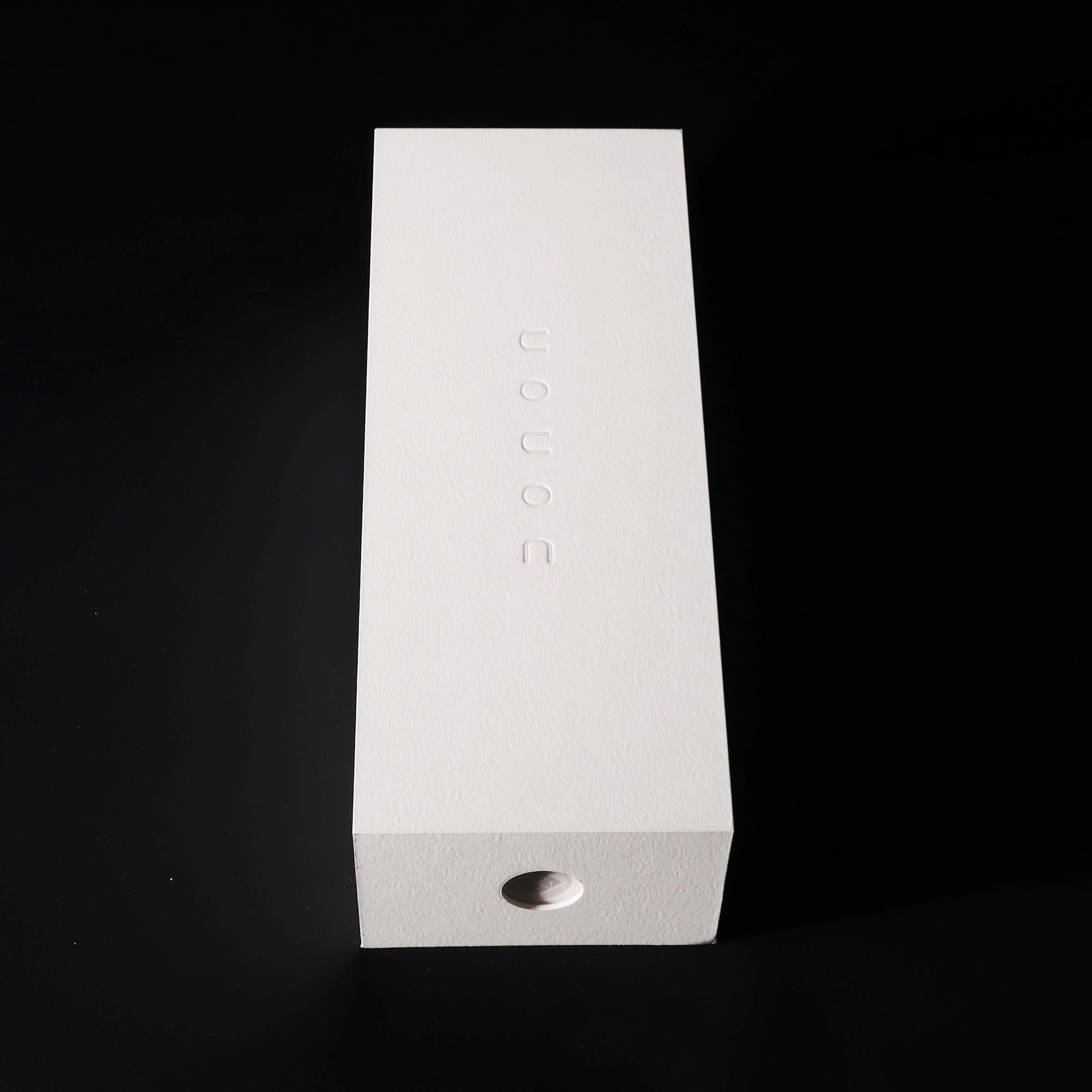
Lid and Base Style Covered Box
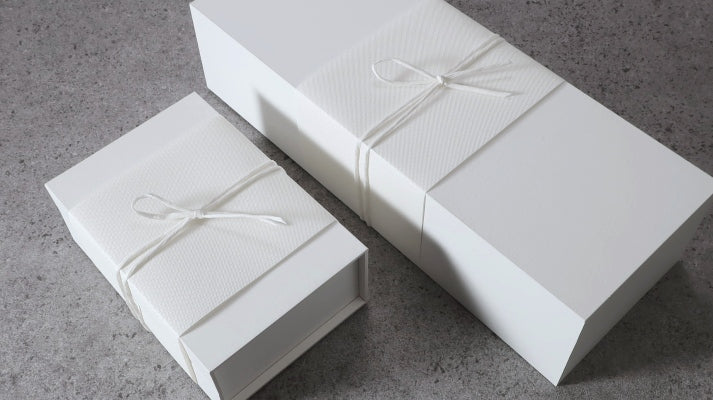
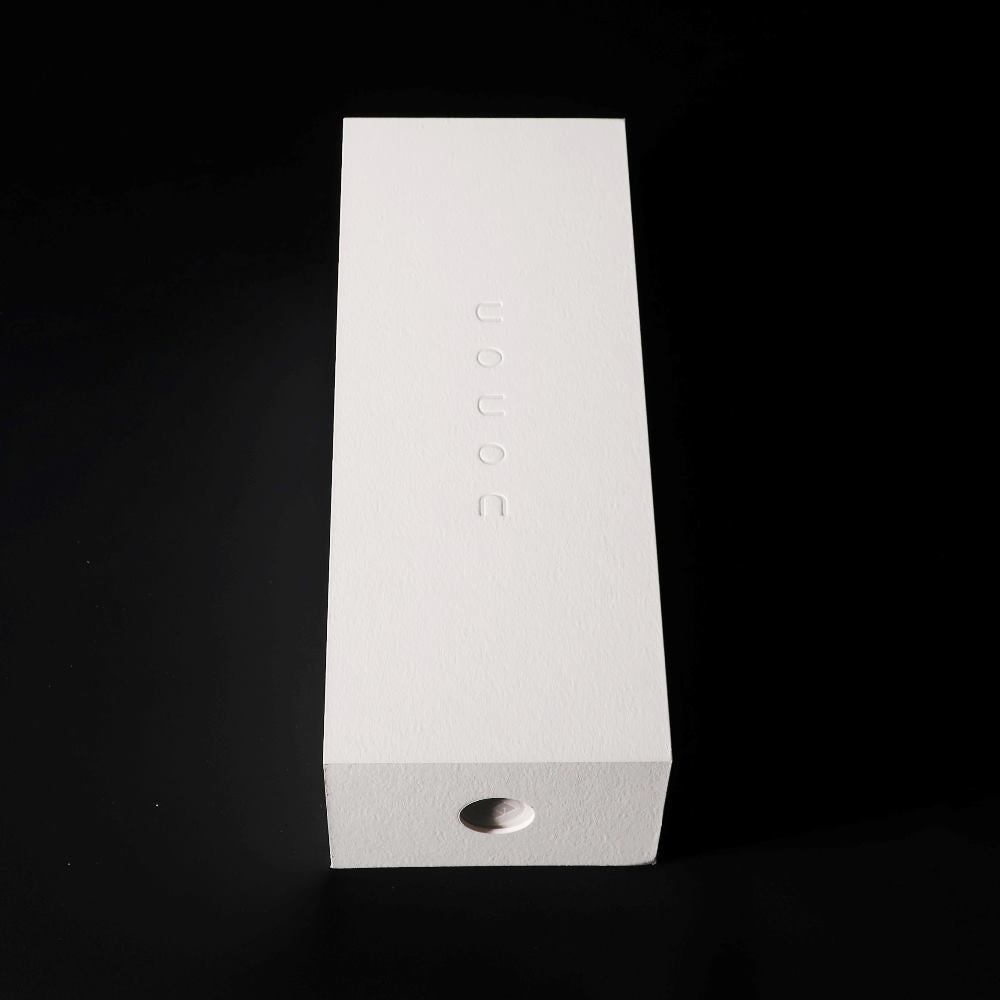
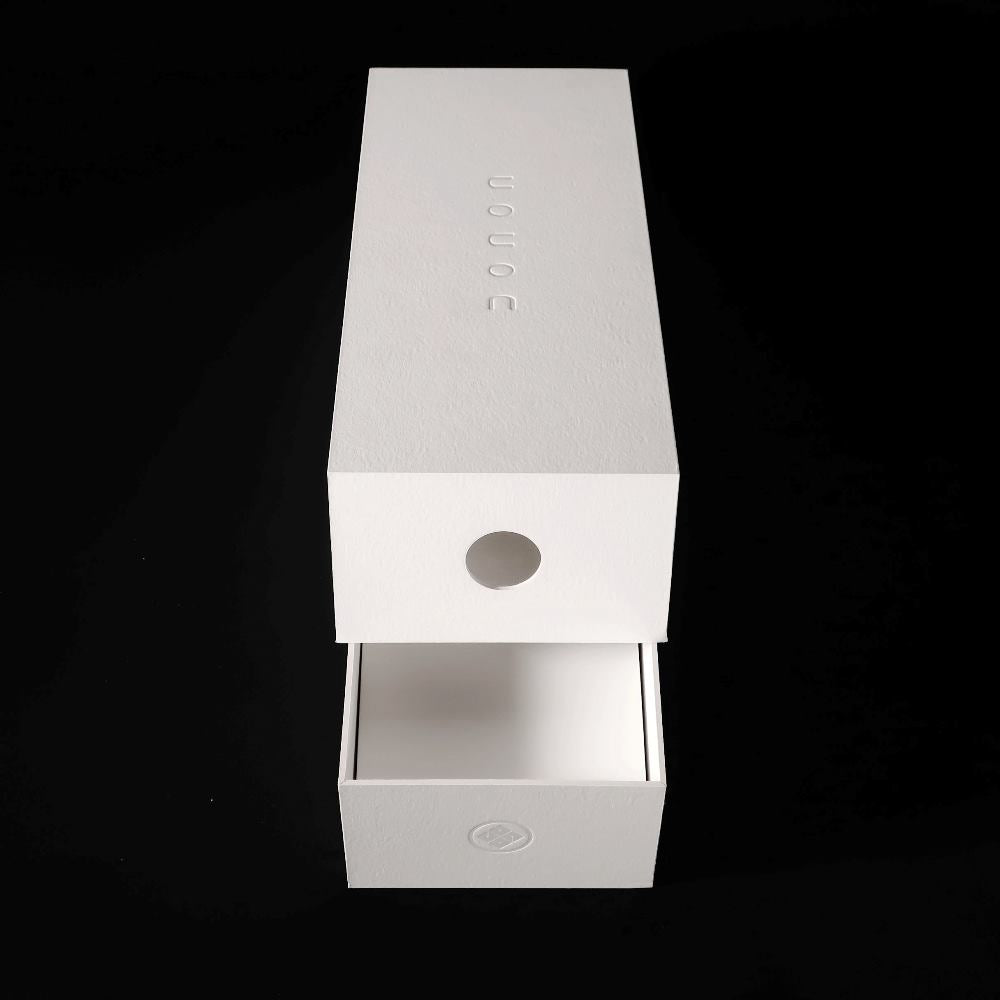
For the Sette Piege model, we use a lid-and-base style V-cut box.
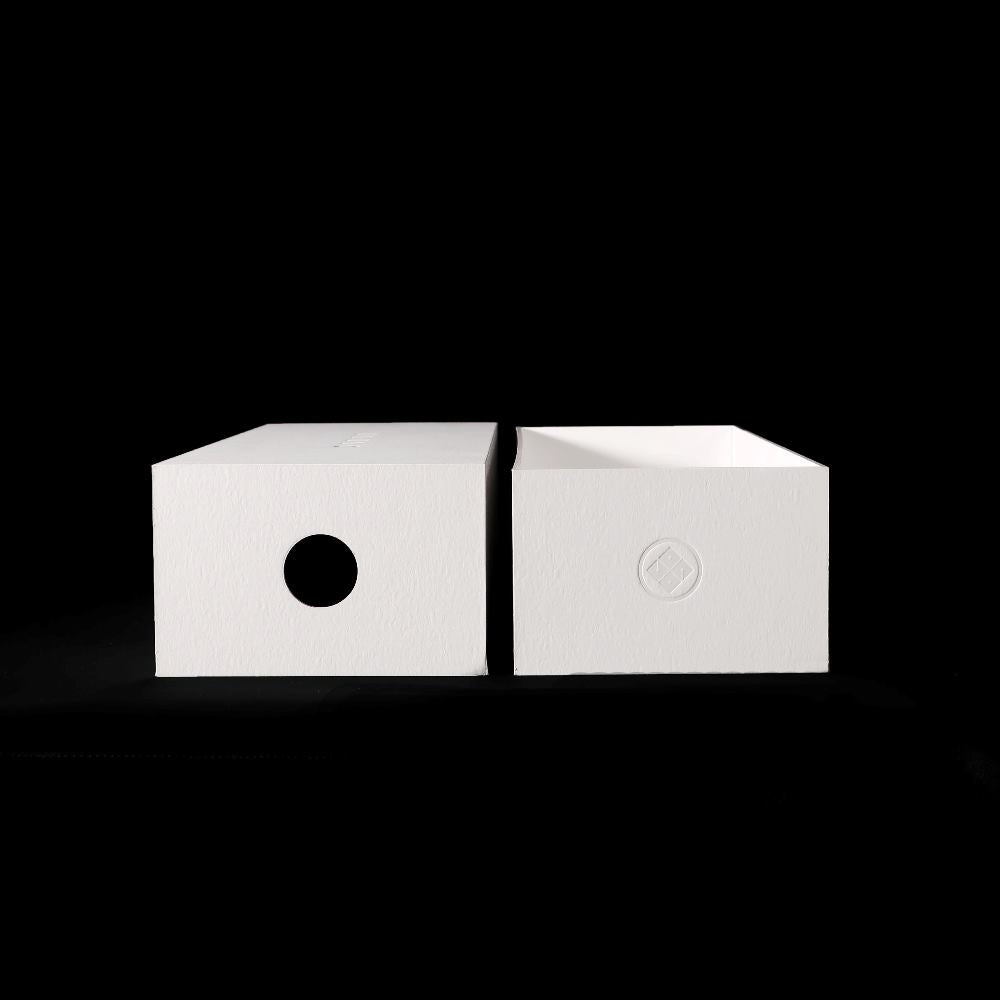
This gift box is meticulously crafted one by one by a paper product manufacturer in Hokkaido with outstanding skills. It uses fine paper (FSC certified forest paper) characterized by a gentle hammered pattern embossing that resembles fine hammer marks. The brand logo is embossed with clear foil on the top and sides, and the side of the lid is circularly cut out so that the side logo is visible.
Furthermore, the inside of the box has a two-layer structure with an inner board to prevent the tie from being crushed, and it is also gently covered with special paper as if it were wrapped in cloth.
This results in packaging that not only offers beauty but also the joy of opening it and a function to protect the tie, embodying our worldview.
Storage Method
After use, please hang the tie in a well-ventilated, dark place to allow the fabric to dry and wrinkles to restore. Please be careful not to place it in direct sunlight, as this may cause discoloration or fading.
Additionally, to prevent pressure marks (indentations in the fabric) on sette pieghe ties, please store them hanging so that they do not come into contact with other objects as much as possible.
Key Specifications
| Item | Details |
|---|---|
| Model |
Handmade Sette Piege |
| Specifications |
・Sfodera (unlined) ・Semi-bottle (Cocon standard style) ・Removable Sanbel interlining ・Hidden vertical woven bar tack (back of large blade) ・Horseshoe-shaped woven bar tack (back of small blade) ・Asymmetrical braided loop (Kakuyatsugumi × Tsuri-yotsugumi) ・Slip stitch ・Ultra-high density Echizen woven brand label with QR code ・Ultra-high density Echizen woven quality tag ・Uses ultra-high density silk fabric "Kokkoku" ・Special finishing process |
| Material | 100% Silk |
| Color | Heather Navy x White |
| Pattern | Stripe |
| Country of Origin | Japan |
| Accessories | Lid-and-base style covered box (original V-cut box) |
Size
| Total Length | Width of Large Blade | Width of Small Blade |
|---|---|---|
| Approx. 149cm | Approx. 8.5cm | Approx. 4.5cm |
Choose options
Recently viewed products
Recently viewed
Reliable support system
SUPPORT
GUARANTEE
Reliable support
BUYING
Purchase service
